
.jpg)
Categories
Buyers, RelocationPublished August 14, 2026
Moving to Las Vegas, Nevada: Everything You Need to Know Before You Move

Moving to Las Vegas, Nevada: Everything You Need to Know Before You Move
By Tom Soileau, Las Vegas Realtor | The Soileau Realty Group
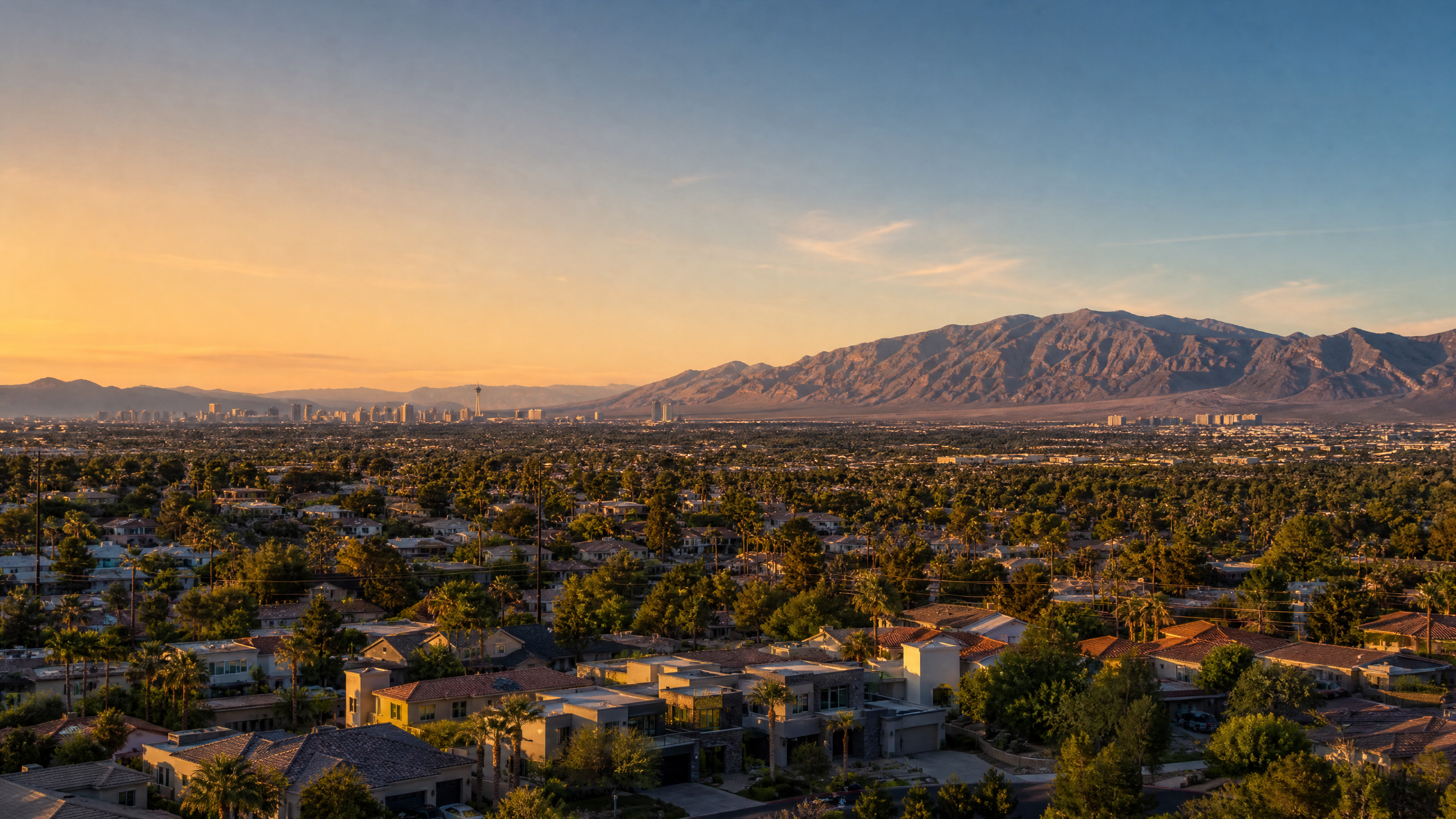
The Las Vegas Valley is a broad residential metro—not only the Strip—with neighborhoods, mountain views, and many different ways to live.
Moving to Las Vegas is often described as a lifestyle decision, a tax decision, or a real-estate decision. In practice, it is all three—and the best relocation choices come from looking at the whole picture rather than focusing on one attractive feature.
The Las Vegas Valley offers warm winters, a broad range of housing, major-airport access, outdoor recreation, entertainment, and a growing economy. Nevada also does not impose an individual state income tax on salaries, wages, or similar compensation. 1 At the same time, Las Vegas has extreme summer heat, significant driving distances, seasonal energy costs, water constraints, insurance considerations, traffic, and a housing market that should be evaluated by neighborhood and property type rather than by one metro-wide number.
This guide is designed for people seriously considering a move to Las Vegas, Henderson, North Las Vegas, Summerlin, Boulder City, or another Southern Nevada community. It is especially relevant to households relocating from California or Washington State, but the principles apply to anyone comparing the valley with another place.
Las Vegas relocation at a glance
| Las Vegas may be a strong fit for people who… | Las Vegas may be challenging for people who… |
|---|---|
| Want abundant sunshine and mild winters. | Strongly prefer cool summers or four distinct seasons. |
| Value a large metropolitan area with many housing styles and communities. | Want a compact, highly walkable city with short distances between daily destinations. |
| Are attracted to Nevada’s individual income-tax structure. | Assume the absence of an individual income tax makes every other expense low. |
| Enjoy outdoor recreation, dining, entertainment, and sports. | Expect the entire region to feel like a quiet small town or a traditional resort vacation. |
| Are comfortable driving and choosing housing around commute patterns. | Depend heavily on public transportation for all daily activities. |
| Want options for new construction, master-planned communities, 55+ housing, or low-maintenance homes. | Are unprepared for summer cooling costs, HOA rules, insurance premiums, or desert maintenance. |
The central question is not whether Las Vegas is objectively “good” or “bad.” It is whether the valley’s climate, geography, housing, employment, taxes, services, and social rhythm match the household making the move.
What is living in Las Vegas actually like?
The residential Las Vegas Valley is much larger and more varied than the Strip. The metropolitan area includes the City of Las Vegas, Henderson, North Las Vegas, unincorporated Clark County communities, master-planned developments, established neighborhoods, rural-feeling edges, and resort-oriented districts. Two households can both say they live in Las Vegas while having very different commutes, housing costs, school options, and daily routines.
For many residents, everyday life is built around a combination of driving, planned errands, indoor spaces, and carefully timed outdoor activities. Mornings and evenings can be excellent for walking, running, cycling, or visiting parks, while the middle of a summer afternoon may be better spent indoors. Homes, vehicles, workplaces, and public spaces are designed around air conditioning for much of the year.
The city’s visitor economy is visible, but it does not define every residential community. Residents may go weeks without visiting the Strip. They may instead spend time in neighborhood parks, restaurants, shopping centers, fitness facilities, community pools, golf courses, libraries, schools, houses of worship, trail systems, or nearby desert recreation areas.
The valley also has a strong culture of convenience. Many neighborhoods place shopping, dining, medical offices, and services within a short drive. The tradeoff is that “nearby” does not always mean walkable, and a location that looks close on a map can take substantially longer during peak traffic, special events, construction, or tourist-heavy periods.
Why do people move to Las Vegas?
People relocate to Las Vegas for different reasons, and those motivations affect which community and property type make sense.
Some move for employment in hospitality, healthcare, education, construction, logistics, professional services, government, retail, or corporate operations. The employment base is broader than the traditional casino stereotype, although leisure and hospitality remain a major part of the labor market. BLS data for the Las Vegas-Paradise metropolitan area reported approximately 1.18 million nonfarm jobs in June 2026, with notable employment in leisure and hospitality, trade, transportation and utilities, professional and business services, education and health services, construction, and government. The June figures were preliminary and should be refreshed before publication. 4
Others move for retirement, a lower-maintenance home, access to 55+ communities, proximity to family, or the ability to enjoy an active lifestyle without winter snow and ice. Remote workers may value airport access, a large metro area, and a broad housing supply, but they still need to confirm internet service, workspace suitability, and the tax and employment implications of working across state lines.
Families may be drawn by job opportunities, new construction, sports, recreation, and the variety of suburban communities. Investors may see population growth, rental demand, and a diversified set of housing types, but investment property decisions require careful analysis of purchase price, financing, rent, vacancy, HOA restrictions, insurance, maintenance, and local rules.
The biggest advantages of living in Las Vegas
Sunshine and mild winters

Summer heat shapes home design, landscaping, utility use, and daily routines across the valley.
The desert climate is one of the valley’s strongest attractions. The National Weather Service’s 1991–2020 normals show a normal mean temperature of 49.5°F in January, rising to 87.6°F in June, 93.2°F in July, and 91.7°F in August. Normal maximum temperatures are approximately 104.5°F in July and 102.8°F in August. 2
Those numbers explain both the appeal and the challenge. Winter can be comfortable for outdoor activities, while summer requires planning around heat. A household that enjoys sunshine and dislikes freezing weather may consider the climate a major quality-of-life improvement. A household that enjoys cool, cloudy summers may feel differently.
Housing variety

Summerlin illustrates how master-planned communities combine housing, parks, trails, and access to desert recreation.
The valley includes resale homes, new construction, condominiums, townhomes, single-story properties, larger suburban homes, luxury residences, high-rise units, age-qualified communities, and properties at a wide range of price points. That variety makes it possible to search for a lifestyle rather than only a city.
The variety also creates complexity. A home in Henderson can offer a different commute and community feel than a similarly priced home in northwest Las Vegas. An HOA may provide amenities and standards but add monthly costs and rules. A new home may reduce immediate maintenance while requiring buyers to evaluate builder options, lot premiums, warranties, construction timelines, and future development around the property.
Outdoor recreation

Red Rock Canyon is one example of the desert and mountain recreation available near Las Vegas.
Las Vegas is surrounded by desert landscapes, mountain views, trails, climbing areas, golf, water-based recreation at Lake Mead, and access to destinations throughout the Southwest. Red Rock Canyon is a prominent example of the region’s outdoor appeal, but it is only one part of the broader recreation network.
Outdoor life here is seasonal and weather-dependent. Summer recreation often shifts toward early morning, evening, indoor facilities, or higher-elevation destinations. People who adapt their schedules can enjoy a wide range of activities; people who expect to hike comfortably at midday in July may be disappointed.
Entertainment, dining, and sports

Harry Reid International Airport is an important travel asset for residents, although airport access and traffic conditions should be checked before travel.
The valley offers a deep restaurant, concert, theater, nightlife, convention, and professional-sports ecosystem. Residents can take advantage of attractions that other cities would consider special-event destinations. The presence of Harry Reid International Airport also supports domestic and international travel. The airport’s official site lists flights, ground transportation, rental cars, parking, and passenger services, while noting current connector-tunnel work that can affect airport access. 5
Nevada’s individual income-tax structure
Nevada’s Department of Taxation states that the state does not impose an individual income tax on salaries, wages, or similar compensation. The same state source emphasizes that Nevada still has other taxes, including sales and property taxes. 1
This distinction matters. A household moving from a state with an individual income tax may see a meaningful change in take-home pay, especially if income is earned through wages or salary. But the benefit should be evaluated alongside housing, insurance, utilities, transportation, healthcare, childcare, and consumption taxes. “No state income tax” is an important factor—not a complete cost-of-living analysis.
The biggest disadvantages and tradeoffs
Extreme summer heat
Las Vegas summers are not simply warm. Normal maximum temperatures exceed 100°F in July and August, and actual heat waves can be more severe. Outdoor plans, pets, children, vehicles, landscaping, and vulnerable adults all require additional attention.
The heat also affects real estate. Buyers should inspect the age and condition of the air-conditioning system, roof, windows, insulation, shade structures, landscaping, pool equipment, and garage ventilation. A home that appears affordable on paper may be less comfortable or more expensive to operate if it has inefficient systems or extensive cooling exposure.
Summer electricity costs
Air conditioning is a necessity rather than an occasional convenience. Electricity use can rise sharply in summer, depending on the home’s size, insulation, windows, thermostat settings, pool, occupancy, and system efficiency. Prospective buyers should request utility history when available, ask about equipment age, and budget conservatively rather than relying on a mild-season bill.
Water is a real planning issue
Southern Nevada has invested heavily in conservation, infrastructure, reuse, and water banking. The Southern Nevada Water Authority reports that the Colorado River Basin is experiencing prolonged drought, that a Tier One shortage is in effect for the operating period described on its site, and that mandatory seasonal restrictions apply to outdoor use. It also reports that outdoor use accounts for about 60% of Southern Nevada’s overall water use and that per-capita water use fell 58% between 2002 and 2025 even as the population grew. 3
The practical conclusion is balanced. Moving to Las Vegas does not mean residents should expect an immediate household water crisis, but water-smart living is part of the region’s long-term reality. Buyers should understand landscaping rules, watering schedules, pool maintenance, HOA requirements, and the cost of maintaining or converting a yard.
Sprawl and driving
The valley’s scale creates housing choice but also increases the importance of location. A home may be attractive, affordable, and well maintained while being poorly suited to a job in another part of the valley. Commute time can influence quality of life, fuel costs, school logistics, healthcare access, and resale demand.
Public transportation exists, including buses and airport ground transportation, but many households still rely primarily on cars. Anyone who wants a car-light lifestyle should test the exact routes and daily destinations before choosing a neighborhood.
Insurance and ownership costs
Homeowners insurance, deductibles, roof coverage, water damage provisions, and policy exclusions should be reviewed carefully. Insurance pricing can vary by carrier, property age, construction details, claims history, roof condition, location, and coverage level. Buyers should obtain quotes before becoming emotionally committed to a property.
HOA dues are another recurring expense. An HOA may maintain amenities, enforce community standards, and support a consistent appearance. It may also regulate rentals, exterior changes, parking, landscaping, pets, and short-term occupancy. A buyer should review the budget, reserves, rules, assessments, and meeting history before purchasing.
How much does it cost to live in Las Vegas?
There is no single meaningful answer because a renter in a condominium, a family buying a newer suburban home, a retiree in a 55+ community, and an investor holding several rentals have different budgets.
A realistic relocation budget should include the following categories:
| Budget category | Questions to ask before moving |
|---|---|
| Housing | What is the rent or mortgage payment, and what alternatives exist in nearby communities? |
| Property taxes | What is the current assessed-tax obligation, and how may it change after purchase or reassessment? |
| HOA | Is there a monthly fee, a transfer fee, a special assessment, or a rental restriction? |
| Insurance | What will homeowners, renters, auto, umbrella, flood, or specialty coverage cost? |
| Utilities | How much will electricity rise during the hottest months? Are gas, water, sewer, and trash billed separately? |
| Transportation | How many miles will be driven weekly, and how do fuel, insurance, maintenance, and parking affect the budget? |
| Healthcare | Are preferred physicians and facilities accessible from the chosen community? |
| Schools and childcare | What are tuition, childcare, transportation, activities, and school-related costs? |
| Maintenance | What will air conditioning, landscaping, pool equipment, pest control, and roof maintenance require? |
| Lifestyle | How often will the household dine out, attend events, travel, golf, ski, hike, or use paid amenities? |
The absence of state individual income tax can improve cash flow for some households, but a move should be modeled using after-tax income and actual recurring expenses. A household should compare its present budget with a Las Vegas budget line by line rather than relying on a national cost-of-living ranking.
Buying versus renting in Las Vegas
Renting first can be sensible for people who have never lived in the valley, are relocating for an unconfirmed job, need time to learn commute patterns, or are unsure whether they prefer Las Vegas, Henderson, North Las Vegas, Summerlin, or another community. A short-term rental period can reveal how summer heat, traffic, school routines, and neighborhood noise affect daily life.
Buying sooner may make sense for households with secure employment, a clear location preference, sufficient reserves, and a long expected holding period. Buyers should still evaluate the property as a long-term financial commitment rather than assuming appreciation will solve an unsuitable purchase.
The most important variables are not simply price and interest rate. They include location, commute, lot and floor plan, age and condition, HOA rules, insurance, taxes, maintenance, nearby development, school assignment, resale appeal, and the household’s expected time horizon.
Resale homes, new construction, and master-planned communities

New construction can offer modern layouts and warranties, but buyers should evaluate upgrades, timelines, fees, and future development.
Resale homes can offer established landscaping, mature streets, known neighborhood patterns, and the ability to inspect a finished property. They may also involve older roofs, air-conditioning systems, plumbing, windows, or electrical components.
New construction may provide modern layouts, energy features, warranties, and builder incentives. Buyers should evaluate the total purchase price rather than the advertised base price, because lot premiums, design selections, upgrades, closing costs, and financing terms can materially change the result. It is also important to understand future phases, nearby roads, school plans, commercial development, and construction timelines.
Master-planned communities can provide parks, trails, amenities, schools, retail, and a cohesive design. They often include HOAs and may have different sub-associations, rules, and fee structures. The right question is not whether a master-planned community is “better,” but whether its amenities, density, fees, design, and location suit the household.
Where should you live in the Las Vegas Valley?

Henderson illustrates the planned suburban environments available across the valley, but the exact commute, fees, and community layout still matter.
There is no universally best area. The best fit depends on commute, budget, age, household structure, desired housing style, outdoor priorities, tolerance for HOA rules, and proximity to healthcare, schools, family, or the airport.
| Area or community type | May appeal to | Important questions to investigate |
|---|---|---|
| City of Las Vegas and established valley neighborhoods | Buyers and renters seeking variety, central access, older neighborhoods, or proximity to employment and entertainment | How do the exact neighborhood, street, school boundary, condition, and commute compare with newer areas? |
| Henderson | Households seeking planned communities, suburban services, parks, and varied housing options | Will the commute, HOA structure, elevation, and community layout fit daily life? |
| Summerlin | Buyers seeking master-planned amenities, parks, shopping, trails, and proximity to Red Rock recreation | What are the subcommunity fees, home age, commute, lot characteristics, and long-term cost? |
| North Las Vegas | Households evaluating newer construction, logistics access, and different price points | How do commute, infrastructure, development timing, schools, and nearby services compare for the exact address? |
| Boulder City | People drawn to a smaller-community feel and proximity to outdoor recreation | Are employment, healthcare, shopping, and commute requirements compatible with a less urban setting? |
| Southwest Las Vegas and Southern Highlands | Buyers seeking newer homes, airport or freeway access, and growing residential areas | How will construction, traffic, school boundaries, HOA costs, and future development affect the choice? |
| Green Valley Ranch, Anthem, and Inspirada | Households interested in planned suburban environments and amenity-oriented living | Which subcommunity, fee structure, floor plan, and commute best match the household? |
| Centennial Hills and northwest communities | Buyers seeking newer residential areas, space, and access to northwest employment or recreation | Is the distance to central Las Vegas, Henderson, the airport, or a specific employer acceptable? |
| 55+ communities | Retirees and active adults seeking age-qualified amenities or lower-maintenance living | What are the age rules, dues, reserve funding, activities, healthcare access, and resale restrictions? |
A local agent can help narrow choices, but the household should visit at different times of day, drive the commute, inspect the immediate surroundings, and verify school, HOA, insurance, and development information before committing.
What Californians should know before moving to Las Vegas
Many Californians compare Las Vegas with their current housing market and tax structure, but California is not one uniform market. A household relocating from Los Angeles, the Bay Area, the Inland Empire, San Diego, or a rural community may have a very different financial and lifestyle comparison.
Nevada’s lack of an individual state income tax may be attractive to wage earners, but the comparison should include California-specific property-tax history, insurance, housing equity, commuting, family support, employment, and travel costs. A California household may find that the purchase price of a Las Vegas home is more accessible than a comparable home in its origin market, but it may also encounter more driving, hotter summers, different landscaping, different utility patterns, and less immediate access to relatives.
The move can also affect how often family members visit. Las Vegas has convenient air service, but airport access, airfare, holiday timing, and ground transportation still cost money and time. A relocation plan should include the emotional and financial value of maintaining those relationships.
What Washington residents should know before moving to Las Vegas
Washington residents may be familiar with the absence of an individual state income tax, so the Nevada tax change may feel less dramatic than it does for some Californians. The larger adjustments may involve climate, housing design, outdoor routines, traffic, vegetation, water, and distance from family.
The desert is not simply a sunnier version of the Pacific Northwest. Summer heat changes how people exercise, garden, handle pets, use vehicles, plan children’s activities, and manage homes. Landscapes are less naturally green, shade becomes important, and air conditioning is central to comfort.
Washington residents may also compare Las Vegas with a region where forests, lakes, mountains, and cooler summer conditions are close at hand. Las Vegas offers its own desert and mountain recreation, but it is a different ecosystem and a different daily rhythm. Visiting during summer before purchasing is especially important.
Schools, healthcare, and family life
Families should begin with the exact address rather than a broad city label. The Clark County School District provides enrollment, zoning, transportation, open-enrollment, and school-level resources. Its current public information also reflects changing enrollment patterns, school choice, and continued growth and planning across the district. 6
Parents should verify the assigned school, boundary, transportation, programs, calendars, special-education services, extracurricular opportunities, and current performance data. A neighborhood that looks ideal on a real-estate map may not provide the school arrangement a family expects.
Healthcare planning is similarly address-specific. Consider proximity to preferred primary-care providers, specialists, hospitals, urgent-care facilities, pharmacies, and rehabilitation services. Retirees and households with chronic-care needs should evaluate networks and appointment access before choosing a distant or isolated community.

Neighborhood parks and recreation spaces support family life, especially when outdoor schedules are adjusted for summer heat.
Family life in Las Vegas can be active and comfortable, particularly for households that use parks, pools, libraries, sports programs, recreation centers, and nearby outdoor destinations. The heat may require families to shift activities indoors or to early morning and evening during summer.
Is Las Vegas a good place to retire?

Age-qualified communities are one option for retirees, but buyers should compare fees, rules, healthcare access, and proximity to family.
Las Vegas can appeal to retirees because of its climate, housing variety, entertainment, healthcare access, airport, recreation, and range of low-maintenance or age-qualified communities. Nevada’s individual income-tax structure may also be relevant to households with certain forms of earned income, although retirement-tax analysis should include federal rules, Social Security, pensions, investment income, property tax, sales tax, insurance, and healthcare.
Retirees should pay particular attention to summer heat, emergency preparedness, healthcare travel time, home maintenance, HOA rules, guest accommodations, walkability, transportation, noise, and proximity to family. A 55+ community may offer amenities and social connection, but it is not automatically the right choice for every retiree. Some buyers prefer a traditional neighborhood, a condo, a smaller community, or a home close to children and grandchildren.
Investment property and rental considerations
Las Vegas real estate can be considered for long-term rental, furnished rental, or other investment strategies, but the investment case depends on the property and operating assumptions. Analyze purchase price, financing, property taxes, insurance, HOA restrictions, maintenance, property management, vacancy, rent growth, utilities, turnover, and regulatory requirements.
Investors should never assume that tourism automatically makes every residential property a good short-term rental. HOA documents, local rules, insurance, licensing, and neighborhood restrictions may limit the strategy. A property that works for a long-term tenant may not work for a vacation-rental model, and a high-demand location may also have a higher purchase price or more competition.
What newcomers commonly misunderstand
The first misunderstanding is that Las Vegas is one neighborhood. It is a valley of distinct communities and jurisdictions. The second is that no state income tax means low total living costs. Housing, insurance, cooling, transportation, and lifestyle spending still matter.
The third is that desert heat is merely uncomfortable. It affects home systems, outdoor schedules, vehicles, pets, landscaping, and utility bills. The fourth is that a visually attractive neighborhood automatically offers a short commute. The fifth is that all new construction is maintenance-free or all resale homes are risky. Each property requires inspection and financial analysis.
Another common surprise is how much the home’s micro-location matters. A few miles can change traffic, school assignment, airport noise, mountain views, access to recreation, HOA structure, and resale appeal. The right relocation process investigates the exact street and not just the city name.
A practical first year after moving
Before arrival, secure employment or confirm remote-work arrangements, establish a realistic housing budget, compare insurance quotes, research communities, review school options, and decide whether renting first is appropriate. If buying, inspect the home, review HOA documents, verify tax and insurance assumptions, and evaluate the commute.
During the first 30 days, arrange utilities, insurance, vehicle registration, healthcare, school enrollment, internet, waste service, and local accounts. Learn the summer watering schedule and understand the home’s air-conditioning controls. Keep records of warranties, service providers, and maintenance intervals.
During the first summer, monitor electricity use, test the HVAC system, inspect landscaping, protect pets and children from heat, and adjust outdoor routines. The first summer is often the moment when a household learns whether the home, commute, yard, and community truly fit.
At the one-year mark, review actual spending against the original budget. Consider electricity, fuel, insurance, HOA dues, repairs, dining, entertainment, travel, and healthcare. A relocation is more successful when the household evaluates the lived experience rather than trying to prove that the original decision was perfect.
Is moving to Las Vegas right for you?
Las Vegas may be a strong fit if you value sunshine, mild winters, a large and varied housing market, outdoor recreation, entertainment, airport access, and a metro area with multiple community types. It may be a poor fit if you strongly dislike heat, prefer compact walkability, want naturally green landscapes, or underestimate the impact of driving, cooling, insurance, and water-conscious living.
Before moving, ask five questions:
- Can the household comfortably manage summer heat and higher cooling demand?
- Does the preferred community support the actual commute, school, healthcare, and family requirements?
- Has the budget included insurance, HOA dues, utilities, transportation, and maintenance—not only the mortgage or rent?
- Has the household visited during the season that will be most difficult for it?
- Is the move based on a complete lifestyle decision rather than one tax benefit or one attractive listing?

A quiet desert sunset offers a more representative closing image for a relocation guide than a generic Strip scene.
A well-planned move begins with research and becomes specific through neighborhood visits, realistic budgeting, and property-level due diligence. The Soileau Realty Group can help prospective residents explore Las Vegas communities, compare homes, review local real-estate options, and decide which questions should be answered before making an offer. Readers can begin with the site’s Search Listings, Top Areas, Buying, Financing, and Connect resources.

Tom Soileau
Realtor/Team Leader | The Soileau Realty Group | eXp Realty Nevada
or another way